
Type “shoes” into most site search bars and you’ll get relevant results. But type “something to wear to a beach wedding” and most search engines give up.
That gap is the whole story of where eCommerce search is headed.
Over the last decade, site search has been built on a simple mechanic: match the words a shopper types to the words in the product catalog.
Merchandising and search teams have kept that approach going with synonym lists, keyword rules, and constant manual tuning.
The problem? People no longer search that way.
Where keyword search breaks
Keyword-based search is no longer enough. Under a keyword-first model, every gap in relevance gets patched the same way: add a synonym, write a new rule, or retune a ranking weight. That works fine at a small scale.
It gets expensive fast as catalogs grow, as language evolves, and as shoppers bring more varied, less predictable phrasing to the search bar.
And somewhere between mobile-first browsing and the rise of conversational interfaces, search queries got a lot more human.
People now search for something in a more casual manner- like how one would describe a problem to a friend.
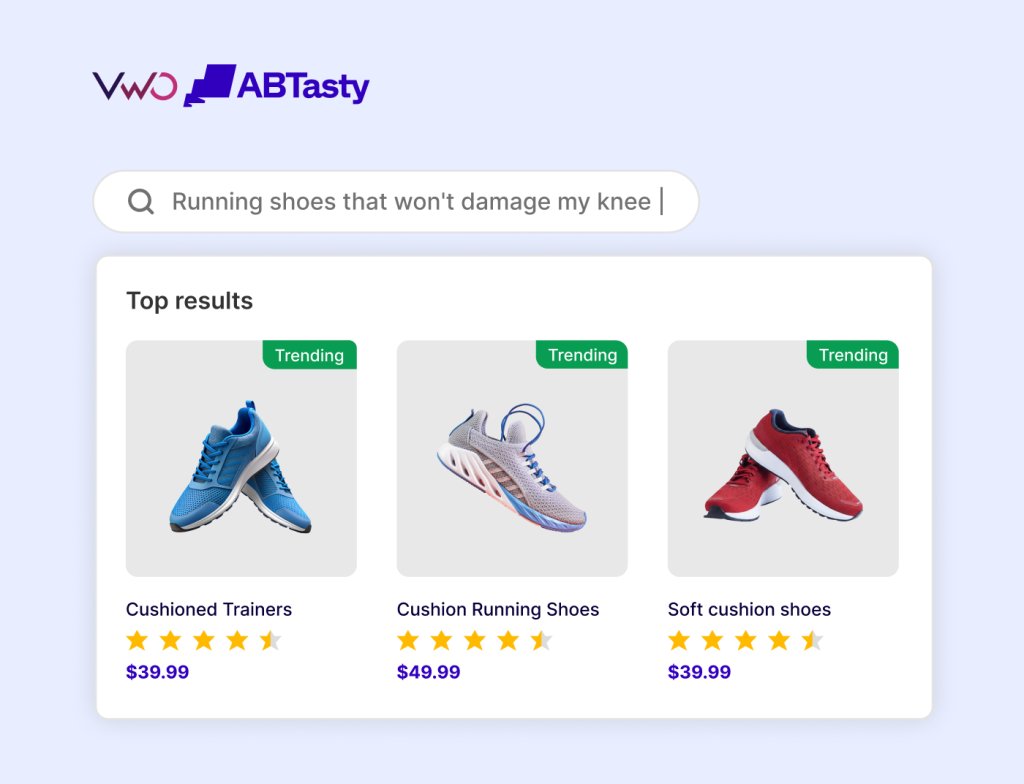
A few examples are:
- “Dress for a work event that isn’t too formal”
- “Running shoes that won’t damage my knees”
- “Laptop bag that fits under an airplane seat”
For highly technical catalogs, exact SKUs, model numbers, or spare parts, literal matching is still exactly what’s needed. The issue is treating keyword matching as the foundation for every kind of query, rather than one tool in a broader system.
How semantic-first search flips the script
A keyword-first engine asks: did the shopper type the right word?
A semantic-first engine asks a different question first: what is this shopper actually trying to find?
That shift in starting point changes what the engine optimizes for.
Instead of relying purely on literal term matches, semantic search interprets meaning, relationships between concepts, and context, then uses precision controls (synonyms, rules, boosts) as a layer on top, where they genuinely add value.
Here’s how the two approaches compare in practice:
| Keyword-first | Semantic-first | |
| Starting point | Exact terms and predefined rules | Meaning and intent |
| Best suited for | Structured, technical, or SKU-heavy catalogs | Natural-language, descriptive, discovery-driven queries |
| How relevance improves | Manual synonym mapping and rule tuning | Understanding context, with precision controls layered in |
| Maintenance load | Ongoing, rule by rule | Lower, since intent is inferred rather than manually mapped |
| Where it struggles | Vague, conversational, or evolving language | Rare cases needing exact literal matches (part numbers, model codes) |
Why semantic search matters
A shopper who searches also browses, filters, compares, and gets nudged along by recommendations. When the underlying search logic can’t interpret intent well, that friction shows up downstream too: irrelevant filters, recommendations that miss the point, category pages that feel disconnected from what the shopper was actually looking for.
Getting the foundation right in search makes everything built on top of it, from recommendations to merchandising, work with better signal instead of guessing.
How does Semantic search improve product discovery
If you’re evaluating your own search setup, a few questions are worth asking, regardless of which vendor you use:
- How much of your current relevance depends on manual rules? If the answer is “most of it,” you’re likely keyword-first by default, not by design.
- What happens when a shopper’s query doesn’t match your catalog vocabulary? A dead end, or a reasonable interpretation?
- How long does it take your team to catch up when shopper language shifts? Weeks of rule updates, or something closer to real time?
- Where do you still genuinely need exact-match precision? Technical parts, model numbers, and highly structured categories are legitimate cases for keeping tight keyword controls in place.
The brands modernizing their search strategy are rebuilding the foundation around intent first, then adding precision back in where the catalog demands it.
That’s the approach behind Search, part of the Wingify Commerce platform. It’s built semantic-first so shoppers get understood even when they don’t type in perfect product language, while still giving teams the synonyms and rule-based controls that complex catalogs need.
See how Wingify Commerce brings search, recommendations, and merchandising together→
Categories:

Pritika Ramani is Director of Product Marketing at VWO AB Tasty, and specializes in product positioning, go-to-market strategy, and customer-centric storytelling, helping bring innovative SaaS products to market. She has 12+ years of experience in the B2B SaaS space and has worked in companies such as Zoho, Freshworks and Yellow.ai.