Your product won’t succeed without a strategic sales funnel to guide customers.
A well-designed funnel acts as a guide, leading your prospects through a journey. From the initial spark of curiosity to the ultimate purchase decision.
But it’s not just about having a funnel; it’s about equipping it with the right tools to automate processes, personalize interactions, and remove friction at every stage.
In this blog, we’ll introduce you to the sales funnel tools that do the heavy lifting for you. From lead capture and nurturing to conversion and retention.
They manage every stage, from lead capture and nurturing to conversion and retention.
So, let’s start.
What is sales funnel software?
Sales funnel software is a tool designed to help businesses manage and optimize the process of guiding leads through the stages of a sales funnel. It provides a structured framework to track, nurture, and convert prospects into customers. This software typically integrates various features such as lead capture forms, email marketing automation, analytics, and A/B testing to streamline the entire sales process.
Sales funnels are divided into three stages, including:
Top of the funnel (TOFU)
This is where you attract leads and make them aware of your business or product. It aligns with the Attention stage of the AIDA model, using strategies like ads, blogs, social media campaigns, and SEO to capture interest.
Middle of the funnel (MOFU)
At this stage, leads show interest in your offerings, and the goal is to nurture this interest into a deeper desire. In AIDA, this corresponds to the Interest and Desire stages. This is done through targeted content, lead magnets, email nurturing, and personalized communications.
Bottom of the funnel (BOFU)
This is the final stage where leads are ready to make a purchase or take action. The goal is to convert them into paying customers. This aligns with the Action stage of AIDA, where offers, product demos, and call-to-action prompts drive conversion.
Our evaluation methodology is based entirely on secondary research. Each tool was assessed using official product documentation, publicly available feature information, and third-party user reviews from G2.
The order in which tools appear and the way they are described reflects their documented capabilities, rather than a preference for any particular platform. We recommend trying free trials wherever available before making any final commitment.
We excluded some tools that focus on a single channel, such as standalone email senders or page builders, without offering the funnel-building, lead-nurturing, or conversion optimization capabilities needed for this comparison.
Four dimensions guided the evaluation of every tool in this guide:
Funnel coverage and data flow: How many stages the tool handles natively, from lead capture and nurturing through checkout and post-purchase follow-up, and how well data moves between them.
Drop-off visibility: How clearly the tool shows where and why prospects leave the funnel. This covers funnel and conversion reports, behavior insights such as heatmaps and recordings, and attribution that ties revenue back to the campaigns and pages.
Ability to act on insights: How quickly you can turn a finding into an improvement, through A/B testing, personalization, and behavior-based email or SMS follow-up.
Total cost of ownership: What the free plan or trial includes, and how the price changes as you add contacts, seats, and traffic.
Quick picks: Best sales funnel software by use case
Category
Tool
Why it wins
Best for optimizing funnel conversions
Wingify
Pinpoints where visitors drop off with funnel reports, session recordings, and form analytics, then tests and personalizes fixes on the same platform
Best all-in-one funnel builder
ClickFunnels
Builds funnels from templates with Smart Checkout, one-click upsells, and A/B testing on funnel steps
Best free plan
Systeme.io
Offers a free plan, and a single funnel can sell a digital product, grant course access, and book a coaching session
Best for nurturing leads with automation
ActiveCampaign
Landing pages feed captured leads straight into email, SMS, and WhatsApp automation
Best for courses and memberships
Kartra
Built-in checkout, upsells, and automatic access delivery for digital products, courses, and memberships
Best for running the funnel and CRM together
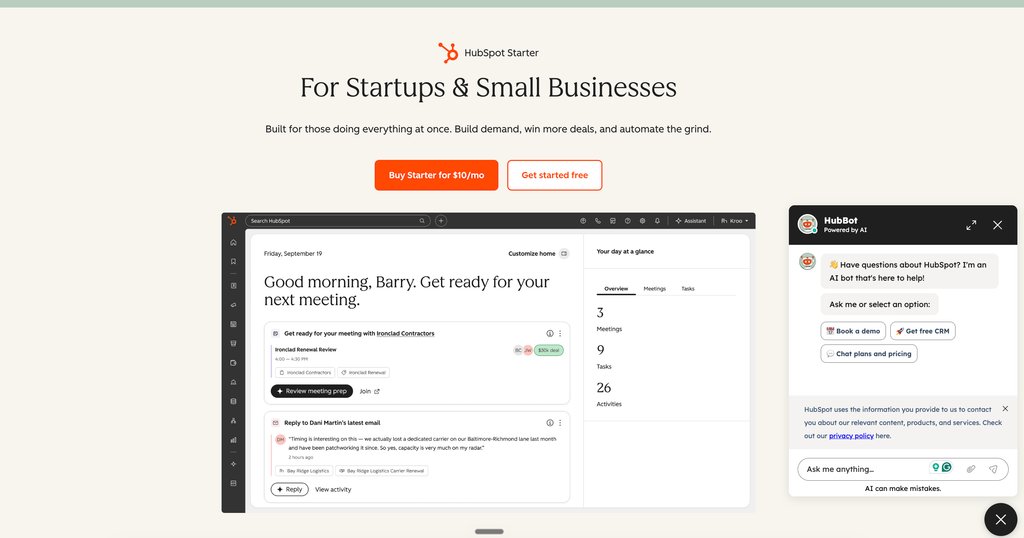
HubSpot
Landing pages, forms, email automation, and deal pipelines all run on one CRM
Best sales funnel software: Comparison
Here’s a table summarizing the above tools:
Sr No.
Tool
Category
Best for
Free plan
Free trial
Starting price
G2 rating
1
ClickFunnels
All-in-one funnel builder
Guiding visitors step by step to a purchase when selling courses, physical products, or services through one funnel
No
14-day
$81/month (billed annually)
4.6/5
2
ActiveCampaign
Email marketing and automation
Capturing leads on landing pages and nurturing them right away with automated email, SMS, and WhatsApp follow-up
No
14-day
$15/month (billed annually)
4.4/5
3
Systeme.io
All-in-one funnel builder
Selling digital products and courses through one funnel that handles delivery and email follow-up automatically
Yes
No free trial listed
$17/month (billed monthly)
4.8/5
4
GetResponse
Email marketing and automation
Running funnels that combine landing pages, automated emails, product sales, and abandoned order recovery
No
14-day
$15.58/month (billed annually)
4.3/5
5
Leadpages
Landing page and conversion optimization
Building landing pages and improving their conversion rates with built-in analytics, A/B testing, and Smart Traffic
No
7-day
$15/month (billed monthly)
4.3/5
6
Kartra
All-in-one funnel builder
Selling digital products, courses, and memberships through funnels with built-in checkout, upsells, and automatic access delivery
No
14-day
$59/month (billed annually)
3.9/5
7
HubSpot
CRM platform
Turning website visitors into leads, nurturing them into sales-ready prospects, and collecting payment, all on one platform
Yes
14-day
$20/month per seat
4.4/5
8
Wingify
Funnel analytics and optimization
Finding where visitors drop off in a funnel, investigating the behavior behind it, and moving straight into experimentation.
No
30-day
Custom pricing
4.2/5
Types of sales funnel software
Sales funnel software helps businesses automate, manage, and optimize the process of moving leads through the sales cycle. There are different types of software designed to cater to various needs, from lead generation to customer retention. Here are the main categories:
1. Lead generation software
These tools focus on attracting and capturing leads through forms, landing pages, popups, and other methods. They help businesses collect information from potential customers and start building relationships.
2. Email marketing & automation software:
These platforms enable businesses to nurture leads through automated email campaigns. They can send targeted emails based on user behavior, segment audiences, and personalize content.
3. CRM and sales management software:
CRM tools help businesses track and manage interactions with prospects and customers. They centralize customer data, automate communication, and enable sales teams to track leads through the funnel.
4. Landing page and conversion optimization software
These tools are designed to create high-converting landing pages, forms, and pop-ups to turn visitors into leads or customers. They often come with A/B testing and analytics features to optimize conversions.
5. All-in-one funnel builders
These platforms combine several features, including landing page creation, email automation, and CRM, into one tool. They are great for businesses that want a holistic approach to funnel management.
Top 8 sales funnel software (Free & Paid): Detailed overview
1. ClickFunnels
What it does
ClickFunnels is a funnel-building platform that guides visitors step by step from their first click to purchase. Users pick a funnel type and template, customize each page in a drag-and-drop editor, and connect checkout, email, and follow-up in the same account.
Funnels can start simple and then expand with upsells, cross-sells, and follow-up sequences that raise customer value automatically.
Key features
The drag-and-drop editor lets users build funnels from templates for lead magnet, webinar, video sales letter, product launch, application, and challenge funnels.
Smart Checkout creates checkout pages, while one-click upsell and downsell pages present extra offers right after purchase to increase order value.
A/B split testing runs directly on funnel steps, and inside automation workflows, so different page or email versions can be tested.
The funnel analytics dashboard shows performance at each funnel step.
Automations enable workflow-based follow-up, such as abandoned cart sequences and course enrollment after purchase.
Countdown Funnels and Conversion Boosters add deadline timers and urgency elements to offers.
The AI Funnel Builder generates funnels from prompts on every plan.
Pros & cons
Pros
Cons
Comprehensive suite for building sales funnels, handling email marketing, creating websites, and processing payments—all in one platform
Pricing can be steep for smaller businesses or solopreneurs
Easy-to-use drag-and-drop editor with no coding required
Wide range of features can feel overwhelming for beginners
Access to FunnelFlix and detailed tutorials to maximize platform use
Community features have issues like outdated content and low engagement
Integrates with popular tools and existing tech stacks
Pricing
ClickFunnels offers three plans, all billed annually:
Launch: $81/month
Scale: $164/month
Optimize: $248/month
Free plan:
No
Free trial:
14-day free trial
Best for
Guiding visitors step by step to a purchase when selling courses, physical products, or services through one funnel.
G2 rating
4.6/5 based on 417 reviews
A customer experience as per G2 reviews:
What I like most about ClickFunnels is how easy it makes creating complete sales funnels without needing to know how to program. Its visual interface is very intuitive, and I love that on a single platform I can design landing pages, automate emails, connect payment gateways, and track conversions. Additionally, the integration with other tools is quite seamless, which saves me a lot of time and effort.
Osvaldo C. Customer Support (Webinars)
2. ActiveCampaign
What it does
ActiveCampaign is a marketing automation platform that nurtures leads across email, SMS, and WhatsApp, with its Active Intelligence AI layer helping build campaigns and automations.
For sales funnels, it pairs a landing page builder with behavior-based automation, so data captured on a landing page flows straight into email, SMS, and WhatsApp sequences and other automation workflows that follow up with each new prospect.
Key features
The drag-and-drop landing page builder lets users start with hundreds of conversion-optimized templates or a blank page and publish without code.
Personalized landing page experiences change based on traffic source, customer segment, or behavior, such as showing returning visitors different content than new prospects.
Site and event tracking records actions ranging from page visits to button clicks and uses them to trigger personalized campaigns.
Active Intelligence suggests improvements to headlines, button placement, and layout based on visitor behavior and past successful campaigns.
Built-in reporting and attribution show which pages, elements, and traffic sources bring in the best leads.
AI content and image generation help produce page copy and visuals directly inside the landing page builder.
Embedded forms, customizable buttons and CTAs, and SMS and WhatsApp capture forms collect leads on the channel each visitor prefers.
Pros & cons
Pros
Cons
Powerful automation capabilities for email sequences and customer journeys
Sales and client follow-up tools are cumbersome, with limited visibility and management
Flexible email and campaign creation with intuitive tools
Higher-tier plans may be expensive for smaller businesses
Improved user experience with features like viewing tags, segments, and lists together
Pricing
ActiveCampaign offers three plan categories, all billed annually:
Email plans start at $15/month
WhatsApp plans start at $99/month
Email + WhatsApp plans start at $112/month
Free plan:
No
Free trial:
14-day free trial
Best for
Capturing leads on landing pages and nurturing them right away with automated email, SMS, and WhatsApp follow-up.
G2 rating
4.4/5 based on 14,811 reviews
Customer experience (as per G2 reviews)
The automations are the standout for me. Once I mapped out our Game Ready lead cadence—Day 0, 3, 5, 7—I was able to build the entire sequence visually and then just let it run. Paired with role-based form routing (rep vs. physician vs. patient), it allows a small marketing team to operate like a much larger one, without having to babysit every send.
Brian W. Founder & Principal Consultant
3. Systeme.io
What it does
Systeme.io is an all-in-one platform for building sales funnels alongside email marketing, online courses, and affiliate programs. Users choose a funnel template, edit each page in a drag-and-drop editor, connect a payment processor, and publish.
A single funnel can sell a digital product, grant access to an online course, and book a coaching session through the built-in calendar, all without external tools.
Key features
Ready-made funnel templates cover lead magnet, product launch, webinar registration, tripwire, and membership funnels.
Funnel sharing sends a complete copy of a funnel, including its structure, design, and pop-ups, to another account with one click.
Deadline funnels set a time limit on an offer and automatically redirect visitors to an “Offer ended” page when the timer reaches zero.
A/B tests split traffic between two page variations to compare headlines, designs, or offers and see which brings in more leads and sales.
Funnel statistics track page views, opt-in rates, and sales for every funnel step in real time, showing exactly where conversions can improve.
Upsell and downsell offers can be added to funnel checkouts, with payments processed through Stripe or PayPal.
Pre-built automation workflows trigger when a contact enters a funnel or makes a purchase, so you only need to customize the email copy and timing.
Pros & cons
Pros
Cons
Excellent migration service that is fast, professional, and saves hours of work
Limited third-party integrations compared to other platforms
Unlimited emails, contacts, landing pages, workflows, and more
Page editor can be clunky, with desktop changes sometimes affecting the mobile version
Highly suitable for businesses selling digital products
Limited advanced features
Affordable compared to other competitors
Pricing
Systeme.io offers three paid plans, all billed monthly:
Startup: $17/month
Webinar: $47/month
Unlimited: $97/month
Free plan:
Yes
Free trial:
No free trial listed
Best for
Selling digital products and courses through one funnel that handles delivery and email follow-up automatically.
G2 rating
4.8/5 based on 751 reviews
A customer experience as per G2 reviews:
I appreciate how Systeme.io is forward-thinking and adding new elements to their offerings every week. What users get for the price point is amazing! And the free migration of my old website to Systeme.io was a huge blessing. As a solopreneur, it is very difficult to manage all of the tasks on my plate. Knowing that Mohamed was migrating my website for me was incredible!
Emily J. Business owner
4. GetResponse
GetResponse is an email marketing and automation software that enables businesses to send automated, behavior-driven email campaigns. It simplifies and automates the sales funnel process, making it an ideal tool for businesses aiming to optimize their marketing efforts. From landing pages to eCommerce integrations, it covers all stages of the funnel seamlessly.
What it does
GetResponse is an email marketing and automation platform with a built-in sales funnel tool called Conversion Funnel. It works as a ready-made funnel creator.
Users can pick a predesigned scenario and fill in their offer details. GetResponse then connects the steps from attracting traffic to closing the sale. Each funnel brings landing pages, automated emails, product sales, and abandoned order recovery into one flow.
Key features
More than 30 predesigned funnel scenarios, complete with images, designs, and sales copy, cover opt-in, lead magnet, sales, and webinar funnels.
Facebook and Instagram ads can be bought directly inside GetResponse to drive targeted traffic to funnel landing pages.
Signup forms are built into landing pages, and exit-intent popups capture the email addresses of visitors who are about to leave.
Webinars, free or paid, run inside the funnel without a separate webinar service.
The stores and products center manages digital and physical products, with imports from Etsy, Stripe, Shopify, BigCommerce, Magento, WooCommerce, and PrestaShop.
One-click upsell pages promote limited-time offers right after a purchase, and product recommendations suggest new items based on past purchases.
Pros & cons
Pros
Cons
Easy-to-use email maker with customizable templates and responsive design
Lacks broader social media integrations and advanced CRM capabilities
Highly responsive and helpful support available round the clock
Reporting lacks flexibility for combining metrics from multiple marketing channels into one report
Offers advanced automation options like autoresponders and drip campaigns
Pricing
GetResponse offers three plans, all billed annually:
Starter: $15.58/month
Marketer: $48.38/month
Creator: $56.58/month
Free plan:
No
Free trial:
14-day free trial
Best for
Running funnels that combine landing pages, automated emails, product sales, and abandoned order recovery.
G2 rating
4.3/5 based on 1,142 reviews
Customer experience (as per G2 reviews)
I really appreciate their amazing customer support service, which is one of the best I’ve ever seen. Another great point is that GetResponse offers an email marketing service that works best for me and is very affordable compared to other platforms like AWeber and Constant Contact I tried before. The email newsletter tool is very valuable, as I use it a lot to send mass promotional emails, leading to a success rate of over 70% in revenue generated. The initial setup was quite straightforward thanks to their user guide on the platform, which I found helpful.
McDonald E. Sales Development Representative
5. LeadPages
What it does
Leadpages is a landing page and conversion optimization platform where users build, host, analyze, and optimize pages in one place, with no traffic caps on any plan.
In a sales funnel, it powers the lead capture stage. Landing pages host lead magnets and collect visitor email addresses so leads can be nurtured toward a purchase.
Key features
The AI Page Builder creates a landing page from a text description, which can then be refined with drag-and-drop editing and AI copywriting.
More than 166 conversion-optimized templates cover a wide range of industries and use cases, giving each page a proven starting layout.
Pages are hosted on a global CDN with free SSL, custom domains, and 99.9% uptime, so they load quickly everywhere.
Built-in analytics report page views, conversions, scroll depth, and visitor intelligence without third-party tools.
Smart Traffic uses AI to automatically send each visitor to the page variant most likely to convert for them, and it is available on the Optimize plan.
More than 50 integrations, including HubSpot, Salesforce, Mailchimp, Stripe, and Zapier, sync captured leads to other tools in real time.
Pros & cons
Pros
Cons
Intuitive drag-and-drop builder with mobile-friendly templates
Limited advanced CRM capabilities compared to competitors
Doesn’t charge extra based on traffic or conversions, making it cost-effective as businesses scale
Lacks robust eCommerce features for product recommendations
Real-time collaboration tools for marketing teams
Excellent customer service and support resources, including helpful newsletters and tutorials
Pricing
Leadpages offers four plans, all billed monthly:
Pro: $15/month
Business: $25/month
Grow: $50/month
Optimize: $100/month
Free plan:
No
Free trial:
7-day free trial
Best for
Building landing pages and improving their conversion rates with built-in analytics, A/B testing, and Smart Traffic.
G2 rating
4.3/5 based on 232 reviews
A customer experience as per G2 reviews:
I love the beautiful templates and seamless integrations. Leadpages is very user-friendly. I had my first funnel and tripwires up and running in just a couple hours!
Jennifer F. Director of Marketing
6. Kartra
What it does
Kartra is sales funnel software that covers the full path from visitor to lead to paying customer in one platform. It connects landing pages, opt-in forms, email sequences, checkout pages, upsells, downsells, memberships, calendars, affiliate programs, and analytics. So businesses can build and run a funnel without stitching tools together.
Key features
The visual page editor builds opt-in, sales, application, product, checkout, upsell, downsell, and membership access pages from templates without code.
Lead capture forms connect directly to lists, tags, and automations, so new subscribers are segmented and automatically receive their lead magnet.
Built-in checkout pages support multiple payment options, coupons, order bumps, upsells, and downsells for digital products, courses, memberships, services, subscriptions, and coaching offers.
Automated email sequences handle nurture, sales, onboarding, and re-engagement, each triggered by a contact’s behavior.
Funnel mapping plans the customer journey before launch, and funnel simulation forecasts results.
Funnel analytics track page visits, opt-ins, email performance, checkout activity, sales, and drop-off points, with real-time funnel analytics on the Professional plan.
Pros & cons
Pros
Cons
Pre-designed campaigns and templates
Page redirection slows download speeds, especially with custom domains
Built-in analytics and a strong calendar component for scheduling paid appointments
Higher pricing, may not be suitable for small startups
Seamless integration of email marketing, lead management, and checkout tools
Detailed analytics across all funnel steps for optimization
Pricing
Kartra offers four plans, all billed annually:
Essentials: $59/month
Starter: $119/month
Growth: $229/month
Professional: $529/month
Free plan:
No
Free trial:
14-day free trial
Best for
Selling digital products, courses, and memberships through funnels with built-in checkout, upsells, and automatic access delivery.
G2 rating
3.9/5 based on 62 reviews
Customer experience (as per G2 reviews)
I like that I can build my funnels customized to my niche. I appreciate that I can build a funnel from the beginning, from the landing page to a sales page, to a checkout page, and then I can use the same template so I don’t have to start from scratch.
Danny M. Owner – Chief Marketing Officer
7. HubSpot
What it does
HubSpot is a customer platform that brings marketing, sales, service, content, and data tools together on one AI-powered Smart CRM.
For its sales funnel, every stage runs in the same system, from attracting visitors and capturing leads to following up, closing deals, and getting paid, with each touchpoint recorded on the contact’s CRM record.
Key features
The drag-and-drop website builder creates landing pages and web pages, with AI content and image generation for copy and visuals.
The drag-and-drop form builder creates mobile-friendly forms that add new leads straight to the CRM, and personalized calls-to-action send visitors to the most relevant landing page.
Email automation creates, personalizes, and sends marketing emails from a business’s own sending domain, with sends scheduled for optimal timing and key metrics tracked.
Ad tracking and management builds targeted ad campaigns, shows which ads turn prospects into customers, and triggers automations when an ad is clicked.
The Prospecting Agent finds the right accounts, sources contacts, and sends personalized outreach based on real buying signals.
Deal pipeline automation moves deals through each stage without manual updates and highlights the deals that need attention.
Pros & cons
Pros
Cons
It offers powerful automation and workflows for lead nurturing, follow-ups, and behavior-based contact segmentation.
Its extensive feature set can make the interface confusing, particularly for new users navigating email creation and workflow options.
Its seamless CRM integration connects marketing activities with sales data, making it easier to track campaign performance and manage sales handoffs.
Some automation scenarios require workarounds, while workflow configuration and permission management can be challenging.
It offers useful AI features, flexible contact organization, and integrations with tools such as Gmail and Calendly.
Occasional email integration issues can interrupt email tracking or disconnect users.
Pricing
Price starting at $20/month
Free plan:
Yes
Free trial:
14-day free trial
Best for
Turning website visitors into leads, nurturing them into sales-ready prospects, and collecting payment, all on one platform.
G2 rating
4.4/5 based on 15,977 reviews
Customer experience (as per G2 reviews)
What stands out most for me is the automation and workflows. HubSpot makes it incredibly easy to set up lead nurturing sequences, automate follow-ups, and segment contacts based on behavior – all without needing deep technical knowledge. The integration with the CRM ensures every campaign action ties directly to sales outcomes, which is a huge plus for tracking performance.
Parth M. Search Engine Optimization Specialist
8. Wingify
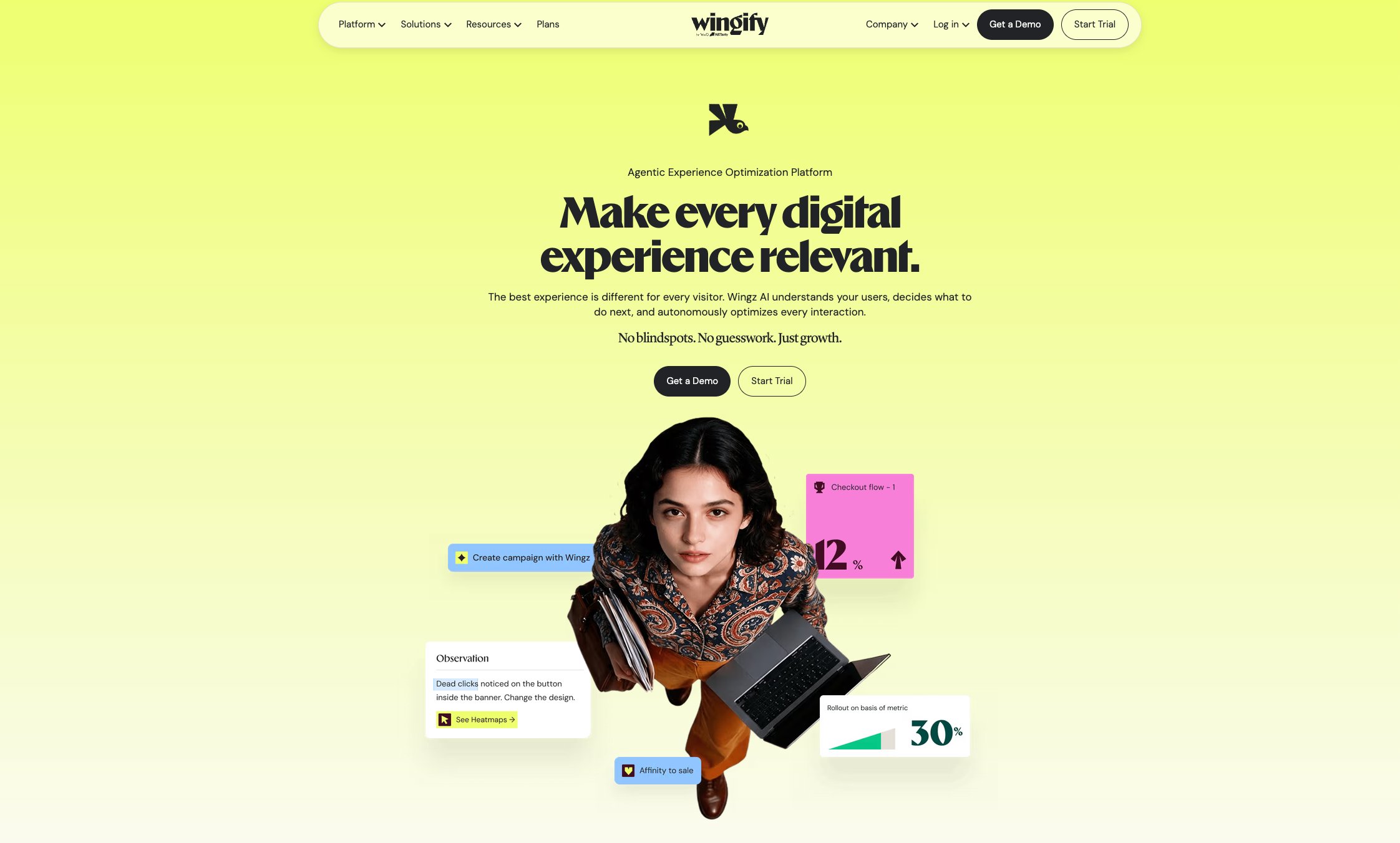
Wingify is an Agentic Experience Optimization platform built to make every digital experience relevant. It helps you improve the funnel you’ve already built, whether it’s on ClickFunnels, HubSpot, or your own website. It identifies conversion drop-offs and helps uncover their causes. You can then test and personalize improvements, with Wingz, its AI layer, connecting each step.
How Wingify improves each stage of your funnel
Find friction and understand visitor behavior:Behavior Analytics in the Wingify Analytics Suite includes heatmaps and session recordings that reveal friction points such as rage clicks and dead clicks. Form analytics identifies fields where visitors hesitate, make corrections, or abandon forms.
Analyze funnels and visitor journeys:Journey Analytics shows how visitors move through your site, from where they convert to where they drop off. Funnel reports show the exact step and percentage where visitors drop off, while Flows reports reveal the paths visitors take before or after a key event, including routes that don’t follow your planned funnel.
Collect visitor feedback:User Feedback surveys capture feedback through exit-intent or post-submission triggers, with AI-generated summaries to help interpret responses.
Prioritize what to test next: Wingz reviews your funnel data, session recordings, and heatmaps together, then surfaces a ranked set of optimization hypotheses so you know where to focus first.
Test improvements and personalize experiences: The Experimentation Suite runs A/B, split URL, and multivariate tests through a visual editor, so teams can change and test funnel pages without developer help. The Personalization Suite tailors page experiences based on traffic source, campaign, new or returning visitors, and on-site behavior.
Pros & cons
Pros
Cons
Offers dynamic and flexible data sampling for better control over data collection.
It may require a learning curve for beginners due to its wide range of advanced features.
Accelerates research and testing with Wingz, its AI layer, which generates hypotheses, builds campaigns, and analyzes results.
It optimizes the middle and bottom of the funnel, while broader funnel ownership sits with CRMs, analytics, and marketing automation platforms.
Supports advanced server-side and mobile app tests.
Delivers customer support with a consistent 99% CSAT score.
How Server Density increased revenue by 114% with Wingify
Server Density, a London-based company that provides hosted server and website monitoring, wanted to know whether raising prices would grow overall revenue or simply cost them sign-ups.
Challenge: The team had two competing hypotheses. Higher prices might reduce free sign-ups, or they might increase revenue despite fewer sign-ups.
Solution: Using Wingify’s A/B testing, the team compared its configurable, per-unit pricing page against a new packaged pricing structure starting at $99 per month.
Results: Free sign-ups dropped by 24.96%, but total revenue increased by 114%.
Free sign-up conversion rate: 6.92% (control) versus 5.19% (variation)
Average order value on paid upgrades: $19.70 (control) versus $55.53 (variation)
The pricing model with fewer sign-ups produced more than double the revenue, a result the team could only confirm by testing with real visitors.
Here’s what one of our clients said,
Wingify is a highly user-friendly and economical tool. It offers an intuitive user interface. It makes it easy to run experiments, gather customer insights, check for leakages in the sales funnels, looking at customer journeys using recordings, and conducting usability tests. The ease of segmenting the audience while creating ‘control’ and ‘variation’ is also something that makes Wingify stand out.
Loef Kleinmeijer Team Lead Conversion & CRO Consultant at ISM eCompany
Best for:
Finding where visitors drop off in a funnel, investigating the behavior behind it, and moving straight into experimentation.
Pricing:
Growth, Pro, and Enterprise plans for each product, with custom pricing available on request.
Sales funnel software offers multiple advantages for businesses looking to improve their sales processes. Some key benefits include:
1. Increased conversion rates
By optimizing each stage of the sales funnel (TOFU, MOFU, and BOFU), businesses can more effectively guide leads toward conversion, resulting in higher sales.
2. Lead nurturing and management
The sales funnel software allows businesses to track, segment, and nurture leads more effectively, ensuring that no potential customer falls through the cracks, especially through the MOFU and BOFU stages.
3. Personalization
With detailed customer insights, businesses can create personalized experiences for leads at each stage, making interactions more relevant and increasing the likelihood of conversion.
4. Analytics and insights
Sales funnel software provides detailed analytics on how leads move through the sales funnel, identifying bottlenecks in TOFU, MOFU, or BOFU, and helping businesses make data-driven decisions to improve the process.
5. Automated follow-ups
Sales funnel software automates follow-up emails, notifications, and reminders, ensuring timely and consistent communication with leads, particularly during the nurturing phase (MOFU).
Choosing a sales funnel software: Key factors to consider
When selecting the best sales funnel software for your business, it’s essential to evaluate your specific needs. Below are some factors to consider:
1. Ease of use
The software should be user-friendly, especially for non-technical users. Look for drag-and-drop editors, customizable templates, and intuitive dashboards that simplify the creation and management of sales funnels.
2. Features and functionality
Choose software that offers the features you need, whether it’s email automation, CRM integration, A/B testing, or advanced analytics. Ensure that the platform aligns with your business objectives.
3. Integration with other tools
Your sales funnel software should integrate seamlessly with your existing tools such as email marketing platforms, CRM systems, and payment processors. This helps create a streamlined workflow and ensures that data is passed efficiently across systems.
4. Scalability
As your business grows, your sales funnel needs might evolve. Choose software that can scale with your business, offering advanced features or higher-tier plans as your team and funnel complexity increase.
5. Analytics and reporting
Analytics tools are essential for measuring the performance of your sales funnel. Look for software that provides detailed reports, conversion tracking, and user behavior insights to help you optimize your funnels and improve ROI.
Wrapping up
With the right tools in your toolkit, you can automate tedious tasks, deliver personalized experiences, and create a seamless journey for your customers. Whether capturing leads, nurturing prospects, or driving conversions, these tools ensure your funnel works smarter, not harder.
Further, if user research and optimization are key priorities for you, try a free trial of Wingify to see how it can enhance your funnel’s performance and boost your revenue.
FAQs
Q1. Do you need an all-in-one funnel builder, or can you connect separate CRM, email, and landing page tools?
The right choice depends on the level of control a business needs at each stage of the funnel. All-in-one builders such as ClickFunnels, Systeme.io, and Kartra manage pages, checkout, email, and product delivery within a single account, which simplifies setup and keeps data centralized.
Q2. What is the difference between a sales funnel builder and a CRM, and which do you need first?
A sales funnel builder creates the pages, checkout, and follow-up sequences that convert visitors into customers, while a CRM tracks contacts and deals as they progress through the sales pipeline. Businesses that sell products, courses, or memberships online typically benefit from a funnel builder first. Businesses whose sales depend on representatives managing deals are better served by a CRM.
Q3. What hidden costs should you expect beyond the monthly subscription?
Beyond the base subscription, businesses should account for transaction fees on sales, pricing that increases with contact list size, per-seat charges for additional team members, and paid add-ons for features such as CRM pipelines or additional messaging channels. Reviewing each tool’s pricing page and terms before purchase helps clarify how costs will scale over time.
Q4. What tools are best for funnel analysis?
Most funnel builders, including ClickFunnels, Systeme.io, and Kartra, provide built-in reporting for each funnel step. For deeper analysis, Wingify Journey Analytics identifies where visitors drop off and at what rate, and Behavior Analytics adds heatmaps, session recordings, and form analytics to explain why. Used together, these capabilities show both where a funnel loses visitors and which areas to improve.
Q5. Can you build a sales funnel for free, and when should you switch to a paid plan?
Several platforms offer free plans suitable for building a basic sales funnel. Platforms such as Systeme.io and HubSpot offer free plans that cover the essentials. Upgrading to a paid plan is worthwhile once a business reaches its plan’s limits or requires advanced capabilities such as automation, upsells, A/B testing, or detailed funnel analytics.
Q6. What reports should a sales funnel tool include by default?
A sales funnel tool should report on page visits, opt-ins, conversions, and sales at each step, so businesses can identify where visitors drop off. For example, Kartra tracks page visits, opt-ins, email performance, checkout activity, sales, and drop-off points across each funnel.
Q7. What are the best tools for optimizing an eCommerce sales funnel?
Funnel builders such as ClickFunnels and Kartra increase order value through checkout pages, order bumps, and one-click upsells.GetResponse recovers lost sales through abandoned order emails and recommends products based on past purchases. Wingify identifies drop-offs between funnel steps, such as add-to-cart and checkout, through funnel reports, and enables teams to test product and checkout page improvements.
Q8. Which tools can help a brand automate sales funnel processes?
Most sales funnel platforms automate tasks across the funnel. ActiveCampaign triggers email, SMS, and WhatsApp sequences based on visitor behavior. Systeme.io runs pre-built workflows when a contact enters a funnel or makes a purchase. Wingify automates funnel optimization, with Wingz generating test hypotheses and the Personalization Suite tailoring pages to each visitor.
Hi there, I’m Aastha Trehan, Associate Manager of Content at VWO. I write about CRO, experimentation, user behavior research, personalization, and AI-driven optimization. With over 3 years of experience in marketing, I focus on creating engaging content that resonates with readers and drives meaningful impact. When I’m not working, you’ll find me playing badminton or pickleball, or binge-watching movies.
You might also love to read these on Landing Page Optimization
8 Min Read
AI eCommerce Optimization: The Smarter Way to Grow Revenue Without Guesswork
14 Min Read
Landing Page Copywriting: A Step-by-Step Guide to Conversions
9 Min Read
5 Landing Page Optimization Case Studies from Leading Brands: Proven Results & Key Insights