
Over the past year, two letters have taken center stage for consumers and businesses alike: AI. This new and fast-maturing technology dominates the news, social media and blogs like this one. I want this post to be different, and most importantly, relatable to you.
So let’s start with a bang: no one really knows what to do with AI, yet everyone wants to check the AI box because they don’t want to be left behind. Businesses want to make sure their technology has AI capabilities. Consumers want to tell their friends they’re on the AI bandwagon. But here’s the truth: very few people fully understand what AI does or how to harness it.
I’ve talked with MarTech sales leaders who tell me the same story. Clients insist the platform must have AI, but when asked, “What’s your AI strategy?” the answer is, “I don’t have one.”

My take: it’s OK not to have it figured out
AI is here to stay, and admitting you don’t know what to do with it yet is perfectly fine.
I firmly believe AI can’t replace people. Human intelligence combined with emotional intelligence can’t be replicated. What AI can do is make us more efficient, so we complete tasks faster and produce more.
Where to start: hyper-personalized experiences
One of the best ways for digital marketers and digital experience practitioners to put AI to work is hyper-personalization. The more relevant an experience is, the more likely a customer is to convert on the KPIs that matter most to the business.
AI-driven personalization has two great strengths. It delivers relevant messages and content in real time. And it can analyze data and surface insights far faster than a data scientist could manually.
How AI personalization is different
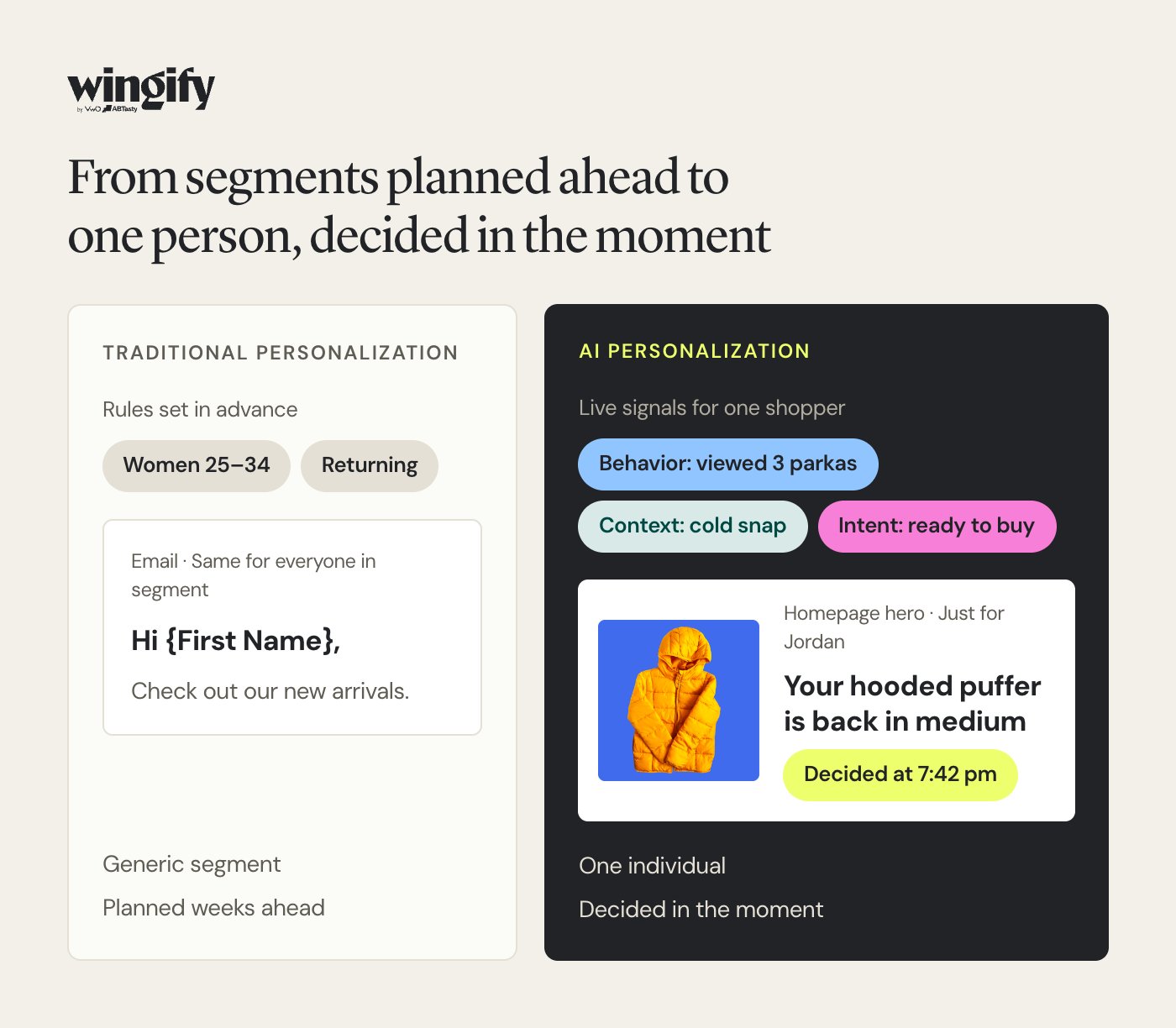
Traditional personalization meant “Hi {First Name}” and rules-based segments defined in advance. AI takes us from generic segments down to the individual. Experiences are shaped by each person’s behavior, context and intent, and they’re decided in the moment rather than planned ahead of time.
Why it matters
Customers now expect relevance by default. It isn’t a nice-to-have; it’s table stakes. People’s time is precious, and brands compete for attention with social media, richer web experiences, the 24-hour news cycle and more.
Generative AI also changed the economics. One-to-one content used to be too expensive to produce. Before, you could personalize which content someone saw. Now you can personalize the content itself.
Where you can use it
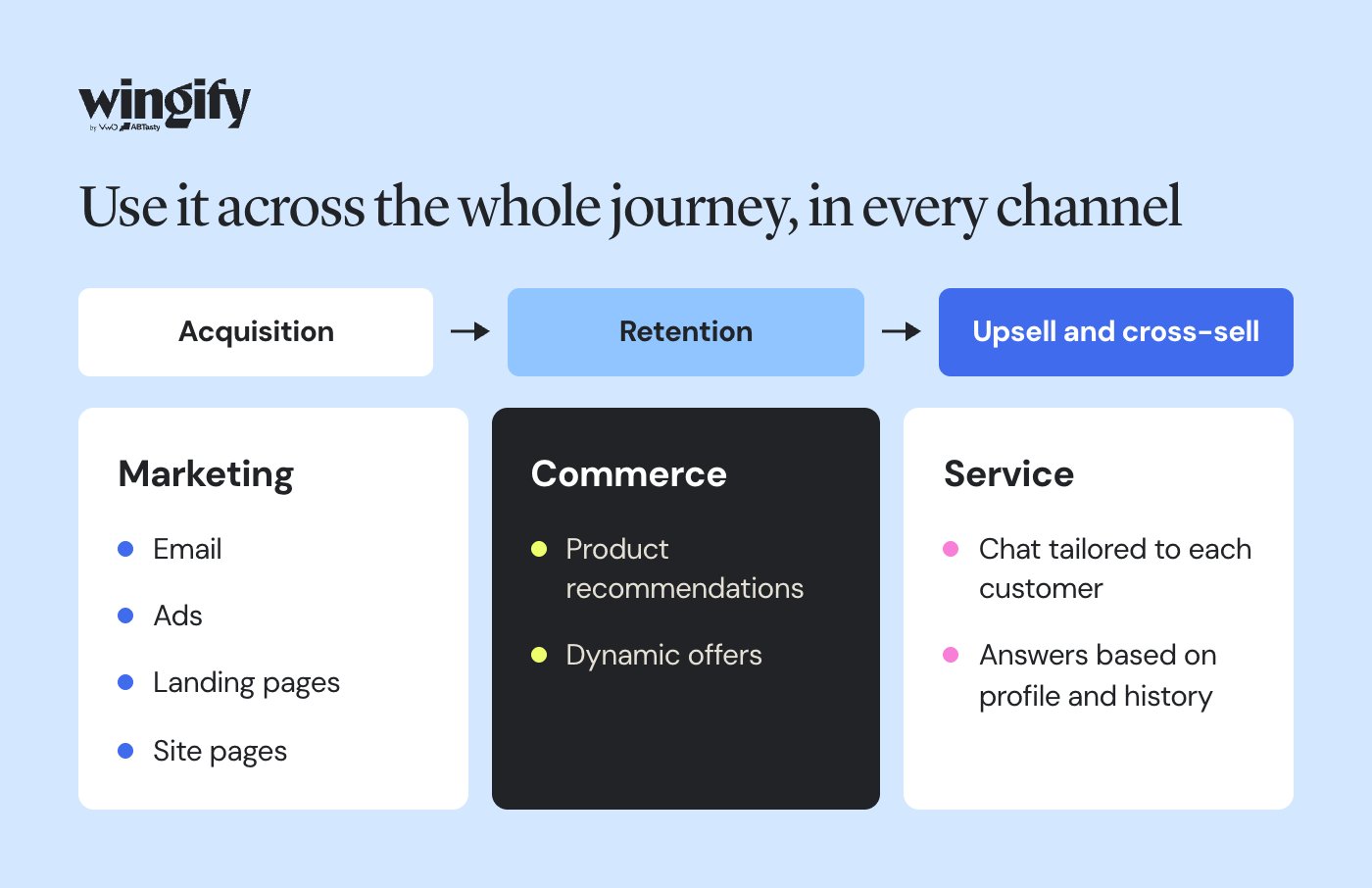
“Where can we use AI?” is a question I hear constantly. The short answer: across the entire customer journey, from acquisition to retention to upsell and cross-sell, across every channel.
- Marketing: email, ads, landing pages and site pages
- Commerce: product recommendations and dynamic offers
- Service: chat and answers tailored to each customer’s profile and history with your brand
What makes it work: data
In short, data. Data makes the world go round. This has not changed! The data in your warehouse, and the data connected to your CDP and activation platforms, has to be accurate. Bad data in means bad data out. That leads to irrelevant experiences, which hurt both your customer experience and your bottom line.
The bottom line
If AI feels overwhelming, that’s because it is. There are countless perspectives on how to use it, including the one you just read, and I’d bet we haven’t scratched the surface of its use cases or impact.
My advice: start small. Pick one go-to-market effort and explore how AI can make it better for your team and your customers
About DEVGRU
DEVGRU is a data first agency specializing in customer experience optimization (CXO). At our core, we ensure your user experience is fully optimized so your customers convert on KPIs most important to your business. From marketing automation and AEO to email marketing and customer data platforms, DEVGRU’s work is proudly done here in the United States. DEVGRU is an official Wingify partner.
Categories:

Michael is the founder and CEO of DEVGRU. With over 15 years of optimization experience, Michael has successfully created and managed optimization programs for a number of Fortune 100 and 500 companies within numerous industries and verticals. Michael attended Bentley University in Waltham MA, where he earned a BS in marketing and an MBA in marketing and international business. In his free time, Michael tries to fix his golf swing and enjoys spending time with his adorable 7 year old niece.